
DISKOM™
Herniated Disc Treatment with DISKOM™
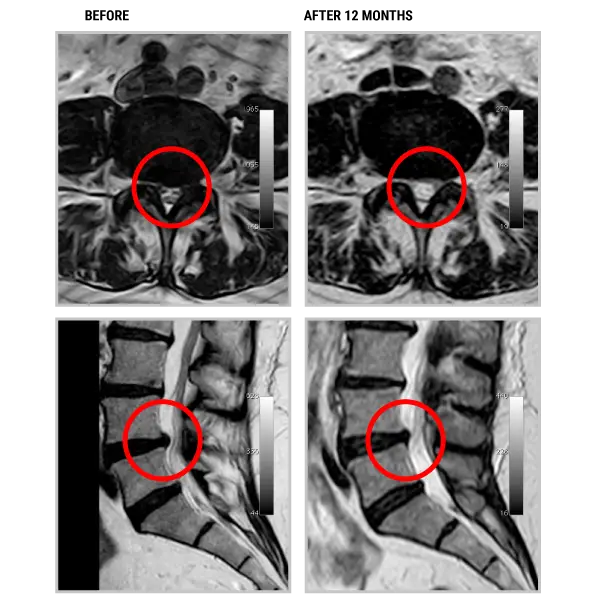
A hernia is a common disorder that occurs when the intervertebral discs nucleus pulposus becomes dislodged from its natural position inside the annulus fibrosus. Most annulus fibrosus lesions are the result of repeated microtraumas or a major trauma that degenerates to allow the nucleus pulposus to bulge and compress a nerve or its surrounding tissues, causing pain in the back and the legs. When conservative treatment fails and symptoms persist or worsen, surgical treatment is considered.
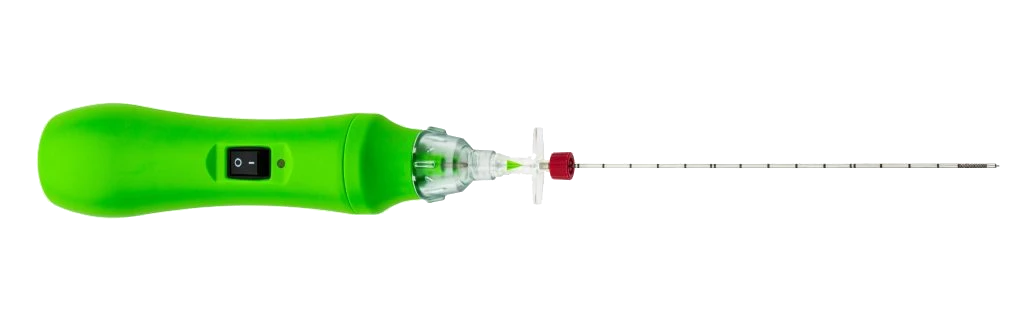
Using DISKOM™, spine specialists can reduce pressure on the nerve root by removing the disc nucleus with a percutaneous procedure, which is minimally invasive.
DISKOM™ is made up of two elements: an access needle with both distal and side openings, and a titanium cochlear tip for the mechanical removal of the nucleus pulposus. The great advantage of this device is that the cochlea is tightly connected, so it is almost impossible for it to detach: this is an advantage that is surely a unique feature of this system.
It is a mechanical removal procedure. It does not make use of either radiofrequency or laser. The wide side opening enables the removal of up to 2cc of disc material. The basic principle uses an Archimedes’ screw or cochlea. The Archimedes’ screw works best with fluid or granular material. If the disk is completely dehydrated (black disk), this principle cannot be applied. Totally extruded hernia is also a contraindication.
SURGICAL TECHNIQUE
- Introduce the access needle under fluoroscopy into the disc.
- Remove the stylet and introduce the probe into the cannula.
- Lock the probe to the access needle through the Luer-lock connection.
- Switch the probe on.
- Carry out a continuous movement in an anteroposterior direction, for 2/3 minutes. Alternatively, proceed with a rotary movement.
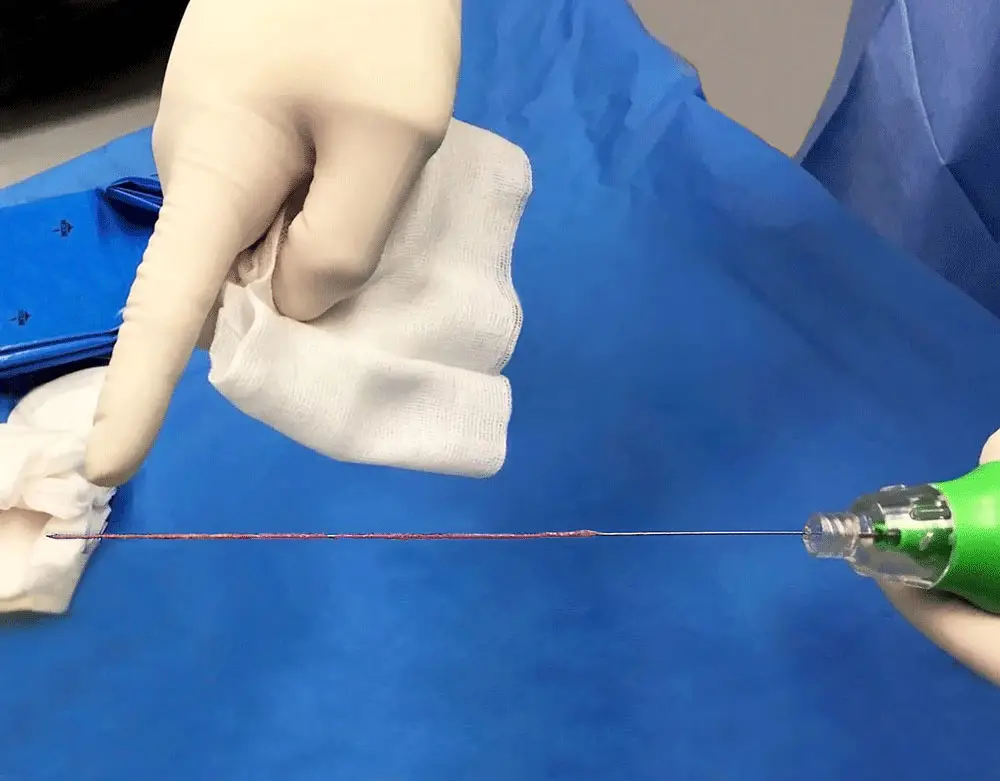
- Disc material is then removed and collected along the probe stylet or into the collection chamber.
- After switching off, remove the device.
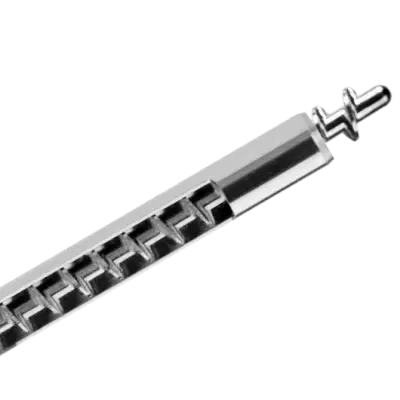
COCHLEAR TIP WITH BOTH DISTAL AND SIDE OPENINGS
DISKOM™ BENEFITS
- Preserves discal annulus integrity
- Rapid rehabilitation
- Total procedure time: 10 to 15 minutes
- Up to 2 cc of disc material collected
- Disc material collected could be used for bioptic procedures
- Available for thoracolumbar and cervical spine
- Totally single-use device
- No further equipment needed
- No capital investment required
- No thermal damage to the nerve roots
- Percutaneous access → totally MIS procedure
- Fast recovery after treatment
- Just local anaesthesia needed
- Fast discharge of the patient